
Why do you need a privacy policy if you use Google Analytics?
Google Analytics, a free website analysis tool from Google, tracks traffic on your website by placing a cookie on visitors’ browsers and collecting information. As part of Google Analytics’ terms and conditions, you’re required to have a privacy policy; and since you’ve begun collecting personal information, you’re also required by law to have one in place.
What Is Google Analytics?
Google Analytics is a free tool used to track traffic to your website and understand user behaviour. Tracking works by placing a cookie on a visitor’s browser when they visit your site. It then gives you data on your visitor numbers, which channels drive traffic to your site, your most popular pages, average time on site, and many other useful statistics.
Google Analytics and Complying with Privacy Laws
As soon as your website begins collecting personal data, which cookies do, by their nature, you’re required by law to have a privacy policy. Most international laws that require this include GDPR, CalOPPA, CCPA, and Australia’s Privacy Act 1988, and they’ll require you to disclose your use of Google Analytics specifically.
Google Analytics Terms of Use
As part of using Google Analytics, you agree to Google’s terms and conditions, which require that you have an appropriate privacy policy complying with applicable laws relating to the collection of personal information from users of your website.
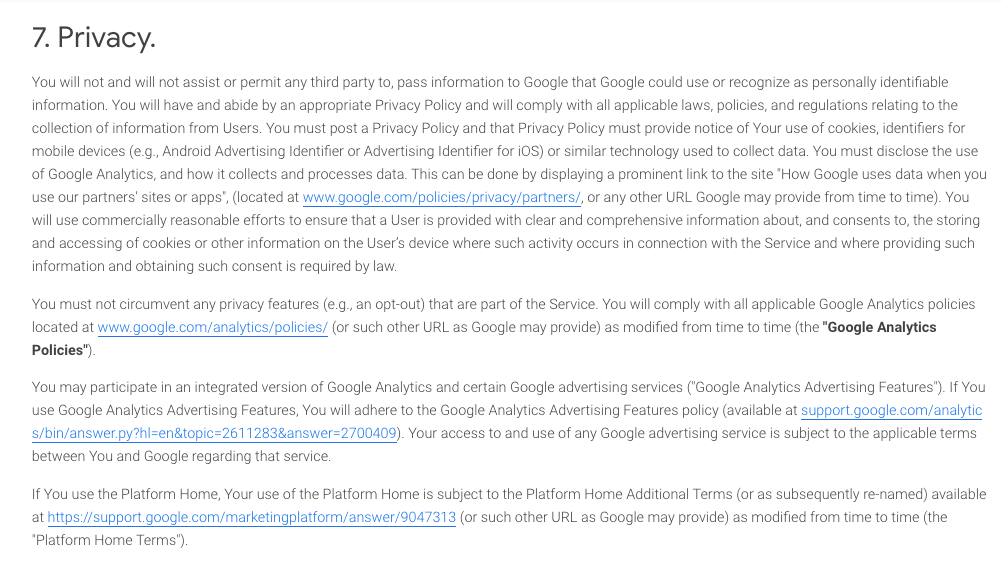 Clause 7 Google Analytics Terms
How to Comply
Using Google Analytics means your website uses cookies to track user information, so you need to disclose this in your privacy policy. Your cookie policy should include:
- The types of cookies you use
- The purpose of these cookies
- The option to opt out of cookie tracking
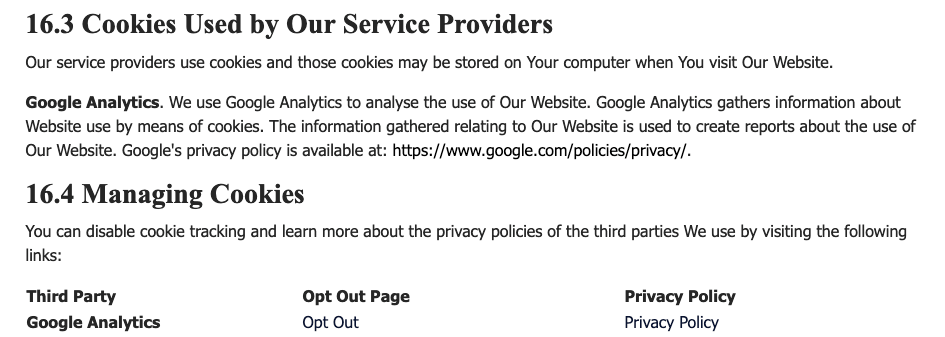 an example of the cookie policy from a PrivacyTerms.io Privacy Policy
Google Analytics Advertising Features
 About Google Advertising Features
Google Analytics Advertising Features group together tools that let you use data collected via Analytics cookies for advertising purposes, including remarketing (retargeting), Analytics demographics, Google Display Network impression reporting, and interest reporting.
If you use these features, Google’s own policy requires that you comply with its Policy for Google Analytics Advertising Features, alongside the Google Play Developer Program Policies and any other applicable policy, which in practice means disclosing your use of these advertising features in your privacy policy too.
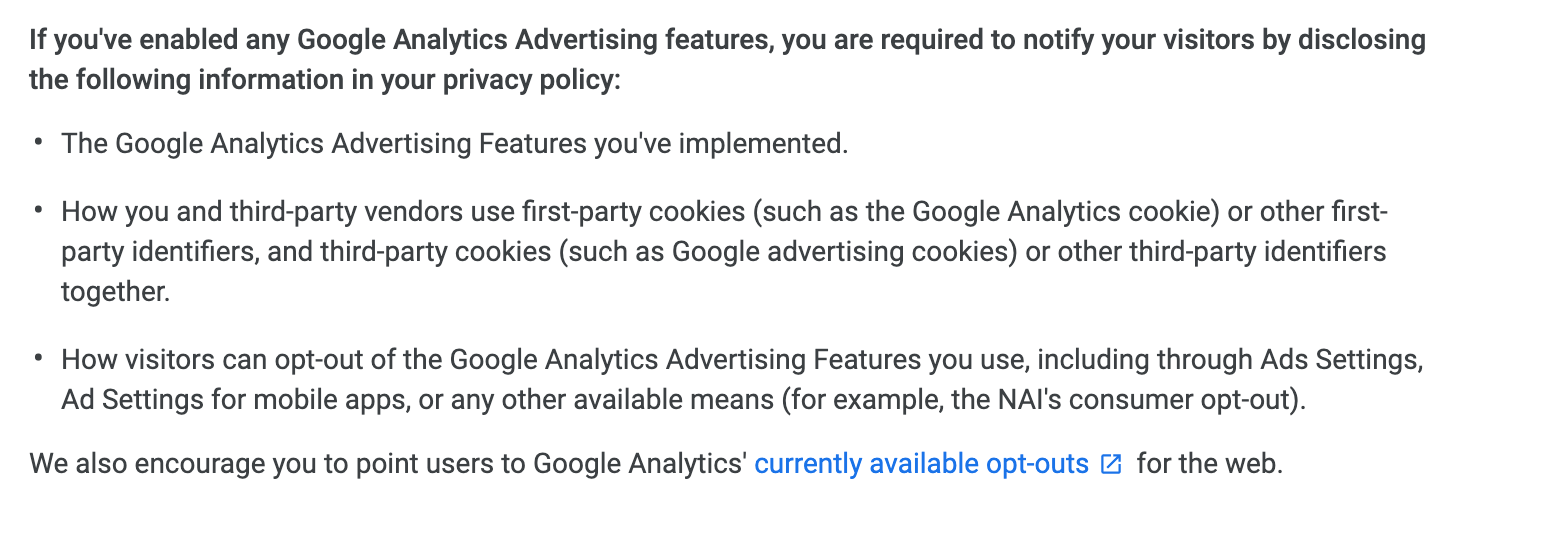 Policy requirements for Google Advertising Features
What This Means for Your Privacy Policy
To use Google Analytics (and its advertising features) compliantly, your privacy policy needs to:
- Disclose your use of Google Analytics
- Include a cookie policy describing the types of cookies you use, what they’re used for, and any third-party cookies involved
- Give users the option to opt out of cookie tracking
- Comply with relevant international privacy laws, including GDPR, CalOPPA, CCPA, and the Australian Privacy Act 1988
- Disclose your use of advertising features, if applicable
Create your Google Analytics compliant privacy policy using our free generator.
The information in this article is for informational purposes only and should not be construed as legal advice on any matter, and does not create a lawyer-client relationship.