On July 10, 2026, U.S. District Judge Yvonne Gonzalez Rogers of the Northern District of California dismissed the federal Wiretap Act claim against Blue Shield of California, with leave to amend. The order, entered in the consolidated case In re Blue Shield of California Privacy Litigation, is one of the first rulings to test wiretap-style pixel-tracking theory directly against a website operator, the company running the tracker, rather than the ad-tech vendor supplying it.
The dismissal matters beyond this one case because it hands other defendants in similar pixel lawsuits a pleading argument they can now cite. Leave to amend means this is not close to over: the plaintiffs get another shot at the complaint, with an amended filing due by July 31, 2026, and the fix available to them is straightforward enough that most observers expect them to take it.
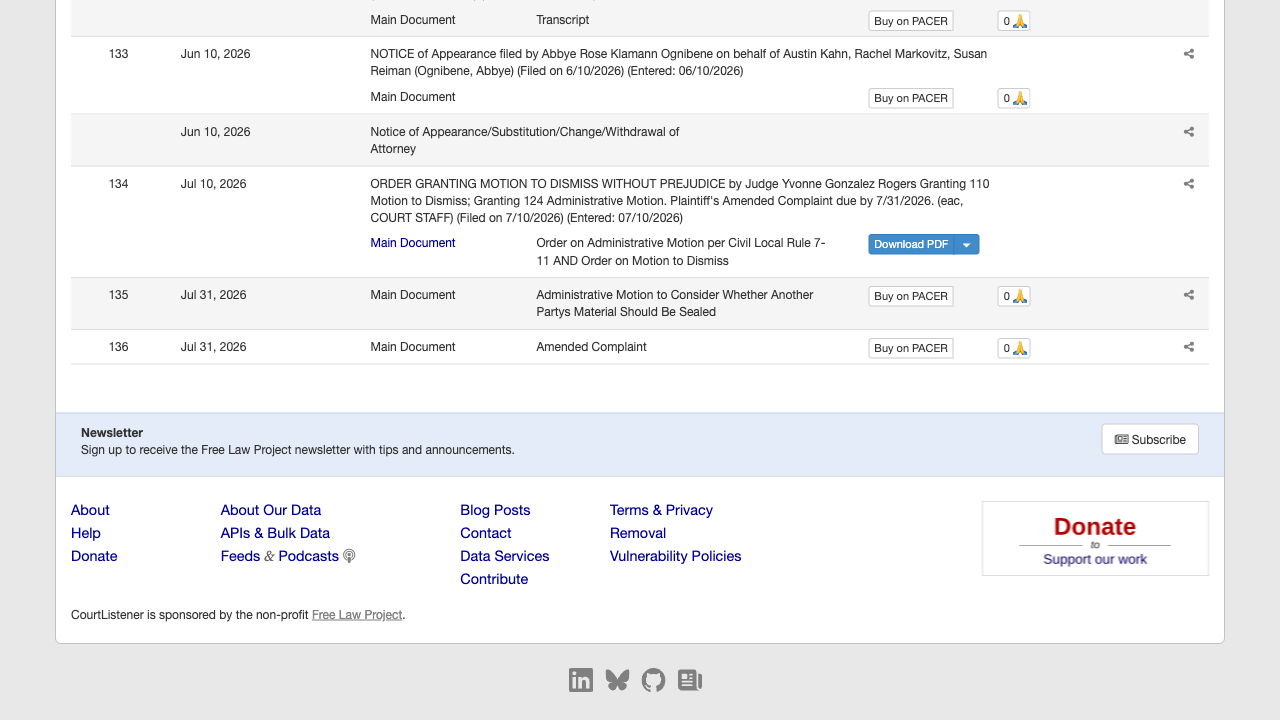
Source: CourtListener, In re Blue Shield of California Privacy Litigation docket, captured August 3, 2026.
What the court actually held
Judge Gonzalez Rogers did not rule that embedding Google Analytics and Meta Pixel on a website is lawful, and she did not close the door on wiretap-style claims over tracking pixels generally. What she held is narrower: the federal Wiretap Act creates no private claim against a company that merely procures, facilitates, or aids another party's interception of communications, according to MLex's coverage of the ruling. The plaintiffs sued Blue Shield, the operator of the member portal where the pixels sat, rather than Google or Meta, the companies alleged to have actually intercepted the data in transit. That is a pleading problem, not a verdict on the underlying theory.
Law360's coverage of the decision frames it as reshaping how pixel-tracking suits get pleaded going forward, not ending them, and that framing fits the posture here. The claim failed on a defendant-selection problem that plaintiffs' counsel can correct by naming Google and Meta as co-defendants alongside Blue Shield in an amended complaint. This is a live, still-developing area of law, and nothing about this ruling should be read as a final word on whether a pixel deployment can expose a website operator to wiretap liability.
What Blue Shield's pixel deployment actually exposed
The underlying facts are not in dispute. Blue Shield ran Google Analytics and Meta Pixel on its member portal from April 2021 to January 2024, and the company's own breach disclosure said those tools transmitted physician-search and condition-related browsing data to Google Ads, a use it had not obtained separate authorization for. According to HIPAA Journal's coverage of that disclosure, the exposure potentially affected up to 4.7 million members, covering searches for doctors and conditions, not just generic page-view metadata.
That is the fact pattern the wiretap theory was built around: not a hypothetical scraping risk, but tracking code that a company itself admitted routed sensitive browsing behavior to an ad platform for nearly three years before anyone caught it. The dismissal did not erase that exposure. It only narrowed who can be sued for it, and under what legal theory, in this particular case.
Why this fits a bigger litigation wave
Figure: Two 2026 health-sector pixel-tracking settlements, shown against Blue Shield's pleading-stage dismissal. Source: Law360.
Blue Shield's dismissal lands inside a much larger wave of health-sector pixel litigation, and the contrast with two recent outcomes is worth noting. Sutter Health agreed to a $21.5 million settlement and Inova Health agreed to a $3.1 million settlement, both resolving claims that the health systems' own tracking tools shared patient data with Google and Meta without consent, per Law360's reporting. Both of those are settlements: money changed hands, and the underlying claims never had to survive a motion to dismiss on the merits Blue Shield just won on a defendant-selection technicality.
Blue Shield's case is still at the pleading stage. Nothing here confirms plaintiffs would lose an amended complaint, or that Blue Shield would win even if they did not amend, given how narrowly the court framed its holding. What it does confirm is that suing the website operator alone, without naming the ad-tech company receiving the data, is now a defense argument other defendants in this litigation wave are likely to raise.
What this means for your privacy policy
For any business running Google Analytics, Meta Pixel, or a similar tool on pages that touch health, financial, or other sensitive information, the practical lesson is not that pixel tracking is now safe. It is that the legal exposure runs through what your privacy policy discloses about it. A policy that does not name the third-party analytics and advertising tools running on your site, or that offers a general "cookies may be used" line without saying what data those cookies carry and to which company, is the gap a plaintiff's attorney or a regulator does not have to work hard to find, regardless of how a wiretap claim eventually gets pleaded.
Our Privacy Policy Generator builds accurate third-party tracking and analytics disclosures into your policy, so the tools actually running on your site, and what they do with the data they collect, are the tools your policy actually names. That disclosure gap is the one part of this story a business fully controls, independent of how the underlying wiretap litigation eventually resolves.
The information in this article is for informational purposes only and should not be construed as legal advice on any matter, and does not create a lawyer-client relationship.