Whether you own a website, blog, or e-commerce store, you may find yourself wondering whether you actually need a privacy policy.
The short answer: if you collect personal data from your readers or users in any form, you do. The three most important reasons are:
- It’s a legal requirement of international privacy laws.
- It’s a requirement of third-party services you use (Google Analytics, for example).
- It builds trust and shows respect for your users’ privacy.
Let’s look at each in more detail.
1. It’s a Legal Requirement of International Privacy Laws
A privacy policy is a legal requirement in most countries once you’re collecting and storing personal data. You might be collecting data through cookies, an email newsletter signup, shipping details for orders, or payment information.
Major privacy laws requiring an accessible privacy policy once you collect personal data include:
- Australia: the Australian Privacy Act 1988
- Canada: PIPEDA (Personal Information Protection and Electronic Documents Act)
- Europe: GDPR (General Data Protection Regulation)
- India: the Personal Data Protection Bill (not yet enforceable)
- South Africa: the POPI Act (Protection of Personal Information Act)
- United Kingdom: the Data Protection Act 2018
- USA: CalOPPA, COPPA, and CCPA
Several of these laws apply not just to businesses operating within that country, but to any business serving users there. A California-based website with users in Australia, Canada, and the EU, for example, would need to comply with CalOPPA, COPPA, and CCPA as well as GDPR, the Australian Privacy Act, and PIPEDA. Having a privacy policy that covers all applicable laws is essential.

2. It’s a Requirement of Third-Party Services You Use
Running an online business usually means using third-party tools: analytics to track traffic, advertising and affiliate links to generate revenue. Most of these services require you to have a privacy policy in place as part of their own terms of use, including:
- Google Analytics and Google AdSense
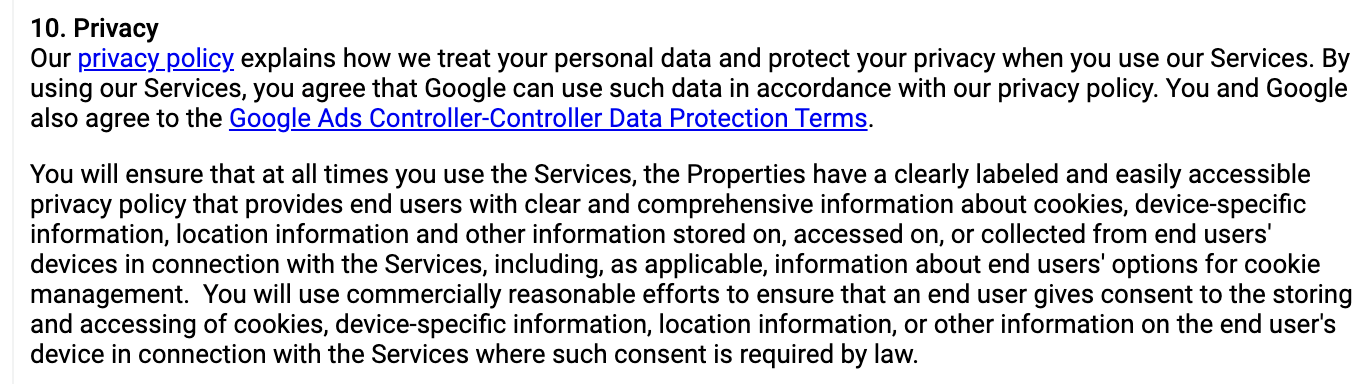 from Google Adsense terms and conditions
- Google Ads and the Google Play Store
- Other analytics tools such as Adobe Analytics, Hotjar, and Matomo
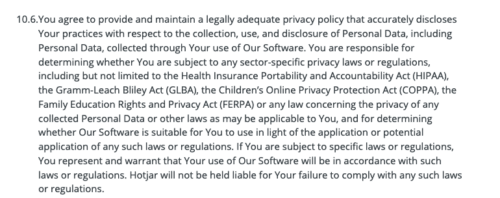 from Hotjar terms and conditions
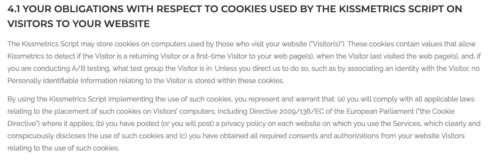 from Kissmetrics terms and conditions

3. It Builds Trust and Shows Respect for Your Users’ Privacy
Beyond the legal requirement, a privacy policy shows your users you take data privacy seriously. It should include:
- What personal data you collect from users
- How that data is collected
- How it will be used
- Whether you use cookies, and how users can opt out
- Any third-party tools or services you share data with
- How you secure personal data
- Where personal data is stored

Conclusion
A privacy policy is required by international privacy laws, by the third-party tools and services you use, and as a sign of respect for how you handle your users’ personal data.
Generate a privacy policy customised for your business, compliant with GDPR, CalOPPA, COPPA, CCPA, PIPEDA, and the Australian Privacy Act.
The information in this article is for informational purposes only and should not be construed as legal advice on any matter, and does not create a lawyer-client relationship.

![Biggest GDPR Fines of All Time: Top 50 Ranked [2026]](/_astro/gdpr-compliance-badge.BVq2lnz4_Z1bs8mH.webp)