Affiliate marketing is a popular strategy where you promote someone else’s products or services in exchange for a commission. You sign up to an affiliate programme, get affiliate links, and earn a commission for every sale made through your link, a win-win for you and the product owner.
But with the rise of affiliate marketing comes a legal requirement for transparency. As an affiliate marketer, you must disclose your affiliate relationship and let your audience know you may earn a commission if they buy through your link. This is where affiliate disclosure comes in.
Why Affiliate Disclosure Matters
Affiliate disclosure is a statement telling readers or viewers that the content they’re consuming contains affiliate links, and that you’ll earn a commission if they purchase through one. It matters both ethically and legally: the Federal Trade Commission (FTC) requires affiliates to disclose their relationship with the advertiser, and failing to do so can carry legal and financial consequences.
FTC Disclosure Requirements
The FTC requires that affiliate disclosures be clear and conspicuous, easy to see and understand, and made before the affiliate link is presented, so your audience can make an informed decision before clicking. The disclosure needs to be visible across every platform you use it on, including blog posts, social media, and video.
Third-party platforms often layer their own requirements on top of this. Amazon’s Associates programme, for example, requires a prominent disclosure statement on every page containing affiliate links. Google requires affiliate links to carry a “nofollow” tag so search engines don’t treat them as an endorsement.
Here’s how some well-known sites handle it:
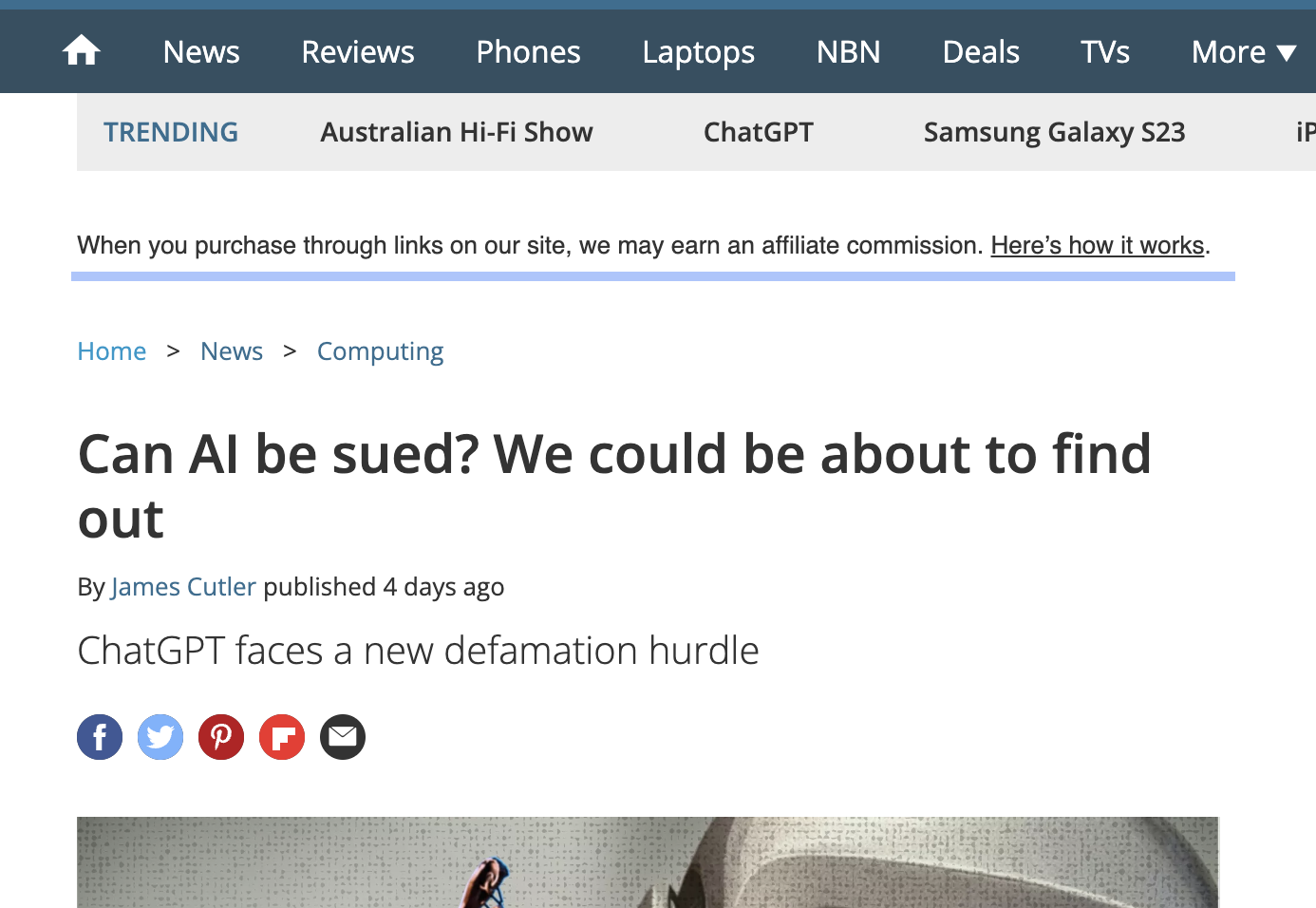 techradar includes a disclaimer that’s well above the fold and short
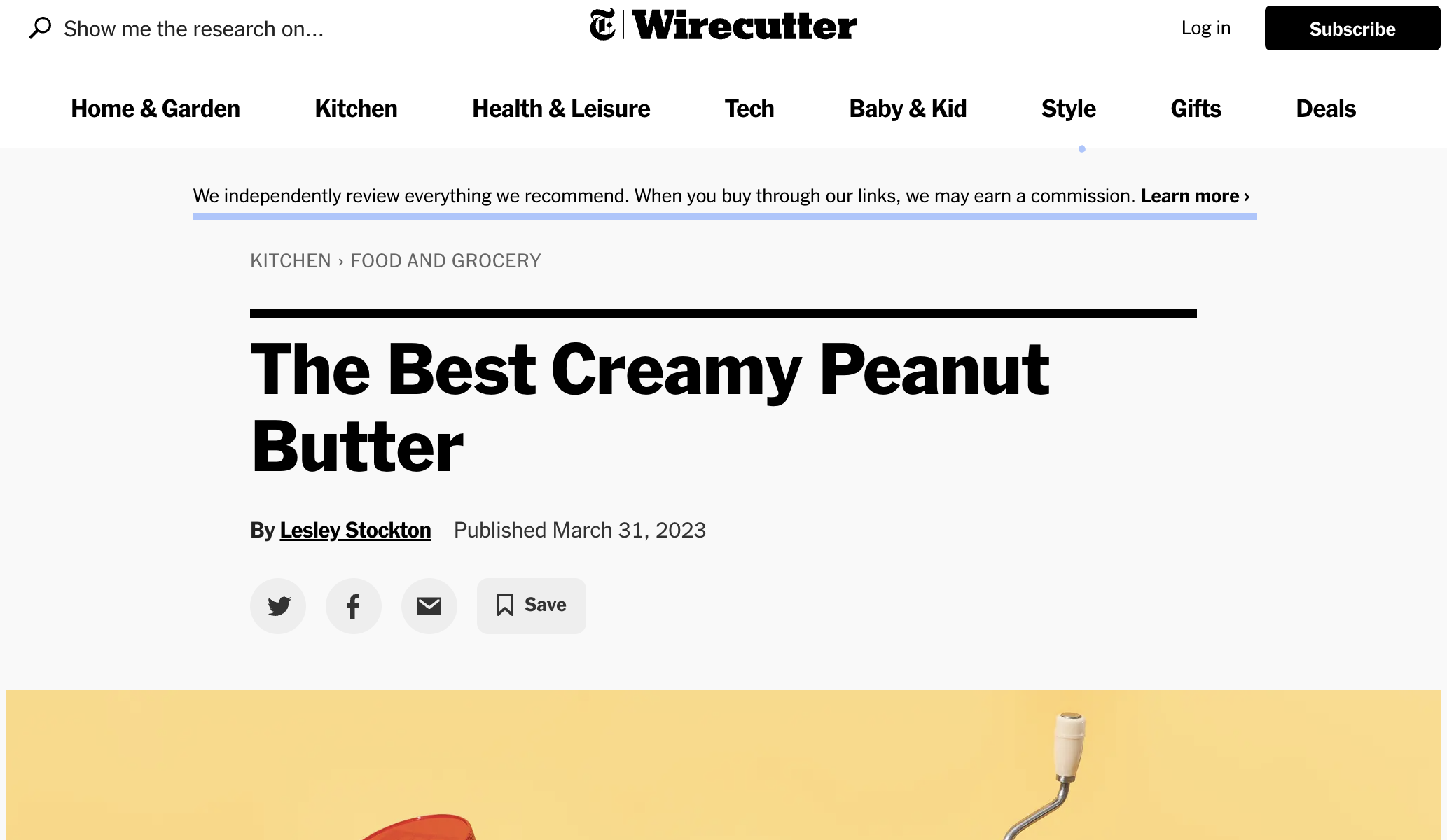 similarly, NYTimes’ wirecutter includes a disclaimer above the fold
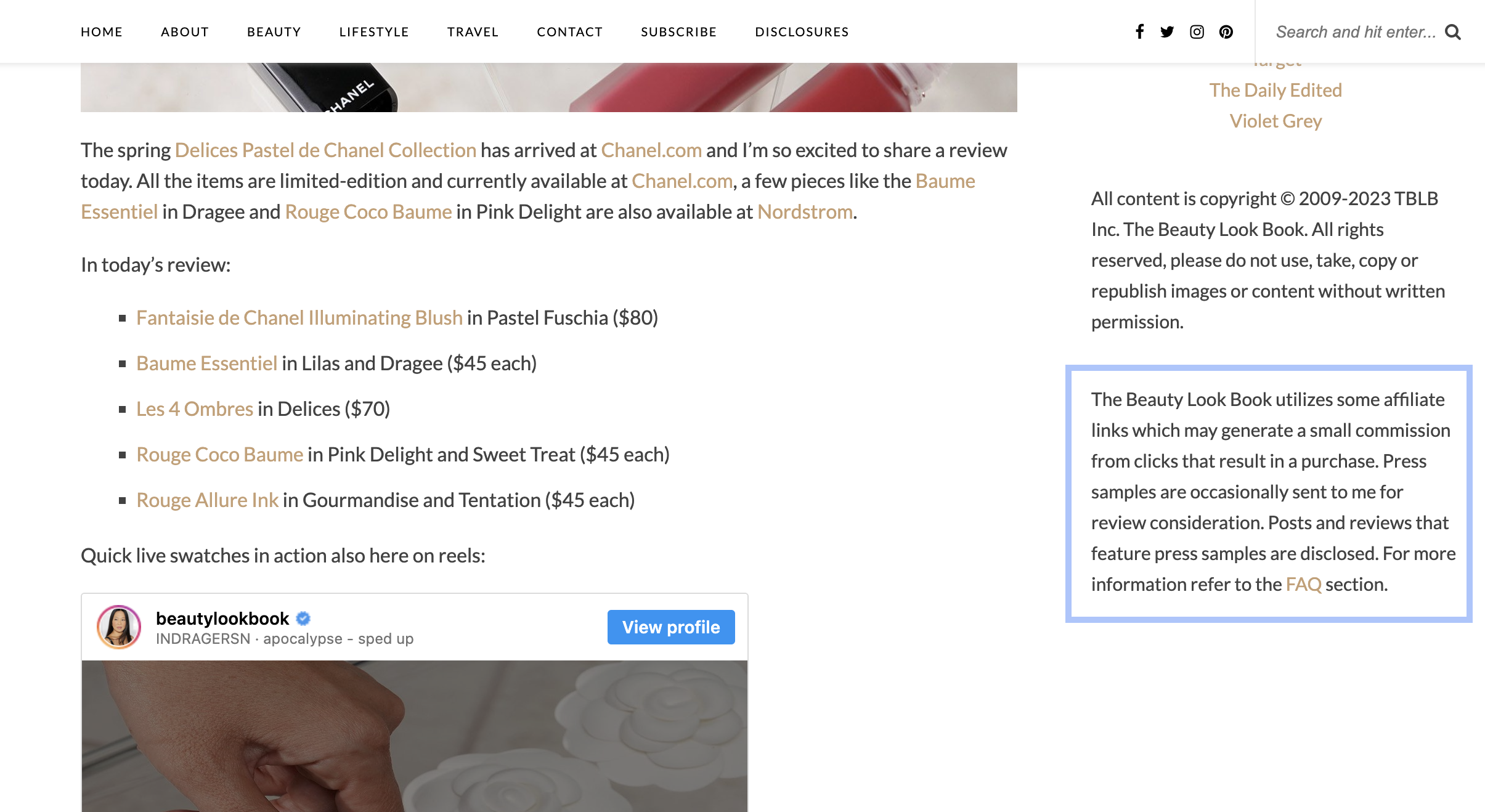 thebeautylookbook.com includes a well-written and easy to understand affiliate disclaimer in the sidebar.
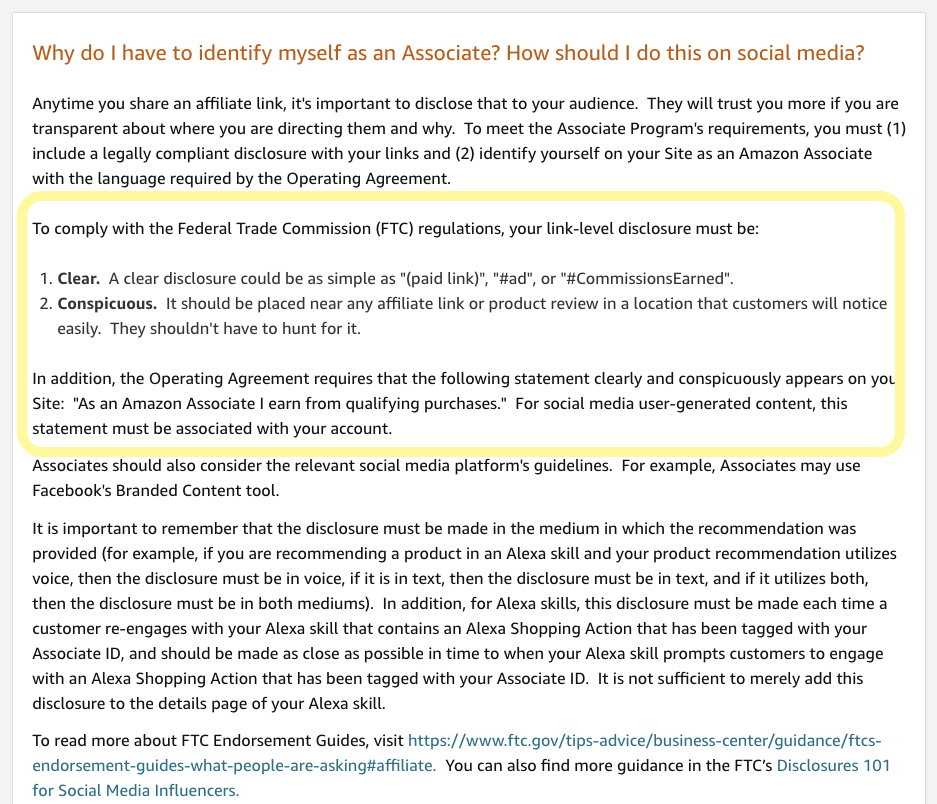 https://affiliate-program.amazon.com/help/node/topic/GHQNZAU6669EZS98
What Makes a Good Affiliate Disclosure
A good disclosure is:
- Visible and clear: placed near the affiliate link (at the top of an article, for instance), not buried in a footer.
- Specific: naming the products or services you’re promoting and how you’re compensated.
- Honest: sharing your genuine opinion of the product, including if you haven’t personally used it.
Common, FTC-recognised examples include statements like “This post contains affiliate links” or “As an Amazon Associate, I earn from qualifying purchases.”
Here are a few real-world affiliate link disclosure examples from around the web:
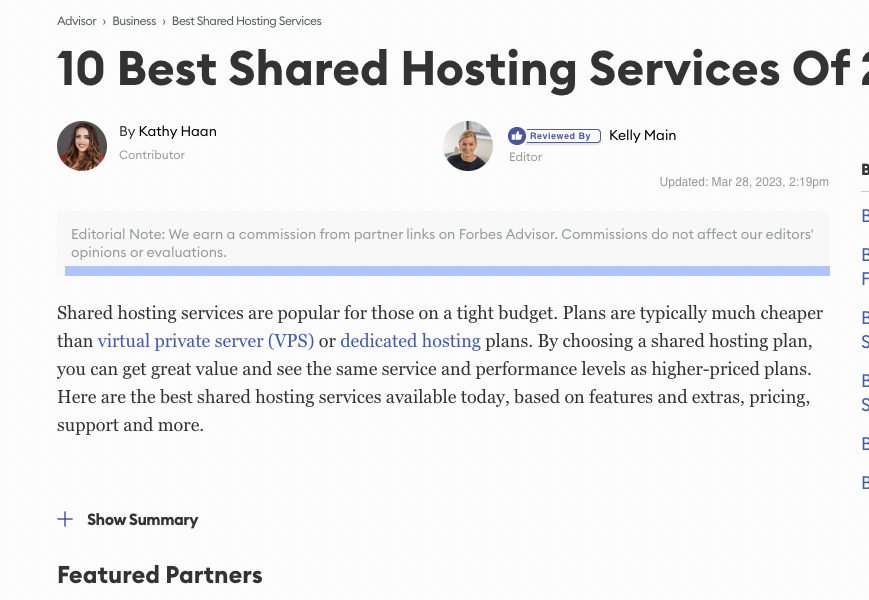 This disclaimer is clear and concise. It states that Forbes Advisor earns a commission from partner links on their website but that these commissions do not affect their editors’ opinions or evaluations.
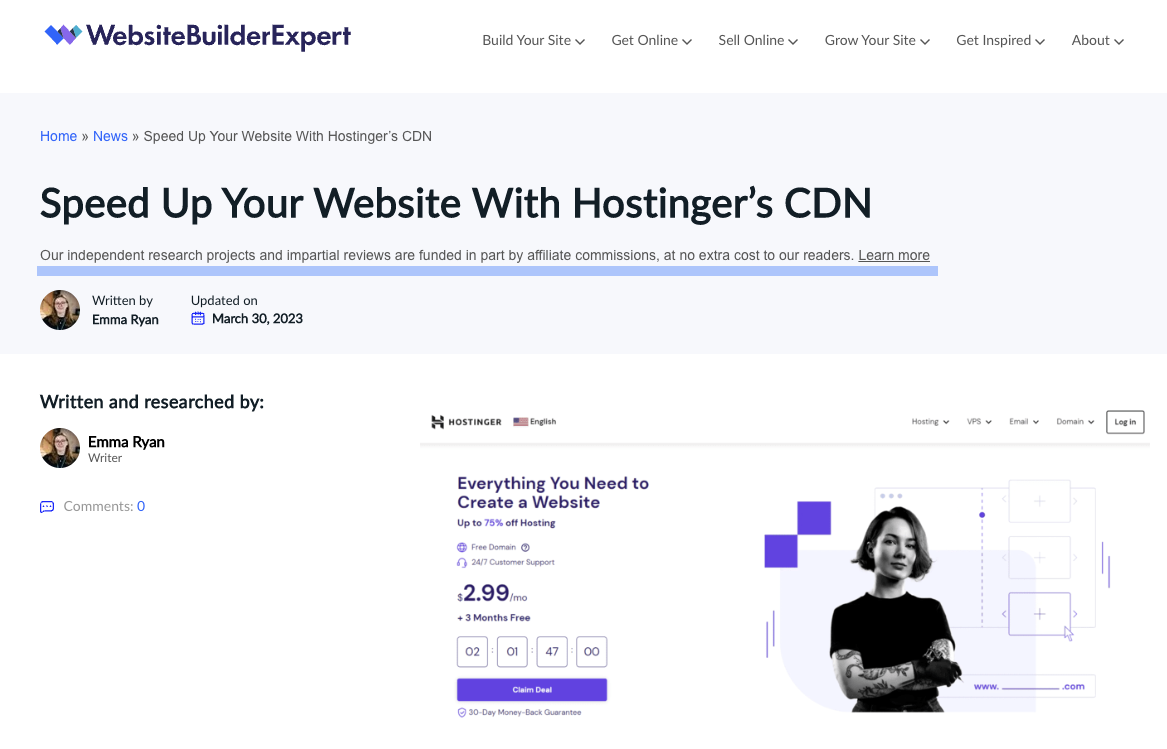 www.websitebuilderexpert.com lets their audience know about their affiliate links upfront, above the fold
 PCMag’s disclaimer is concise, honest, and transparent about the nature of the affiliate relationship and how it benefits both PCMag and its users.
Where to Place Your Disclosure
- Blog posts: at the beginning of the post, easy to find.
- Social media: using hashtags such as #ad, #sponsored, or #affiliate alongside the link.
- Videos: at the start, either spoken or on screen.
- Email: at the top of the email, or linking to your disclosure policy.
Avoid burying your disclosure in the footer or sidebar where readers are less likely to see it.
How to Write Your Own
If you’d rather write your own disclosure statement:
- Make it easy to find, near your affiliate links, not hidden away.
- Use simple, everyday language rather than legal jargon.
- Consider a visual cue, like an asterisk or icon, to draw attention to it.
Conclusion
Affiliate disclosure is a critical part of affiliate marketing. Being transparent about your affiliate links maintains your audience’s trust and keeps you compliant with FTC guidelines and any platform-specific requirements you’re operating under.
Our disclaimer generator can help you build a clear, compliant affiliate disclosure statement for your blog, website, or social media accounts.
The information in this article is for informational purposes only and should not be construed as legal advice on any matter, and does not create a lawyer-client relationship.