What exactly is a disclaimer, and why do you need one?
A website disclaimer is a legal statement that helps reduce legal liability for the website that displays it. It identifies areas of your business or website that could create confusion or misinterpretation for your users, and helps protect the content and services you provide.
What Do You Need in Your Disclaimer?

Do You Need a Disclaimer?
First, recognise your need for a disclaimer. If you provide products, services, or both, you’re going to need one. Products are easy to identify, but services can be less obvious: a service can be providing information (articles or other media) or providing assistance (IT, financial, or medical services, for example).
What Might You Be Liable For?
Once you recognise the need for a disclaimer, consider the type of liability you might face. Written content on your website could expose you to liability for the information provided. Selling a product could expose you to claims that a customer was injured by it. Allowing comments means you’ll want a disclaimer removing liability for users’ own content.
What Would You Like to Protect?
Your written and media content is your intellectual property, so you’ll want an intellectual property disclaimer. You may also want to protect your logo and any symbols or words that identify your business, often the copyright and IP disclaimers live in your terms and conditions agreement.
Examples of Useful Website Disclaimers
There’s a wide range of disclaimers that can help reduce legal liability, and combining the ones relevant to your circumstances gives you effective coverage. Here are the most common types:
Consent
A general disclaimer every website should have, outlining that you accept no liability for damages in connection with your website.
Content
Used by websites that allow user comments: it removes liability and responsibility from you for whatever your users have written.
External Links
Explains to users that you don’t endorse or take responsibility for information found on third-party websites you link to. Many government and institutional websites publish a version of this disclaimer for exactly this reason.
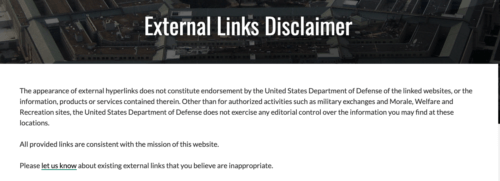 U.S. Dept of Defense External Links Disclaimer
No Professional Relationship
If your site covers a professional topic like law, medicine, or fitness, this disclaimer explains your content isn’t a substitute for professional advice, and that using your site doesn’t create a professional relationship between you and the user. It’s common on counselling and other advisory websites.
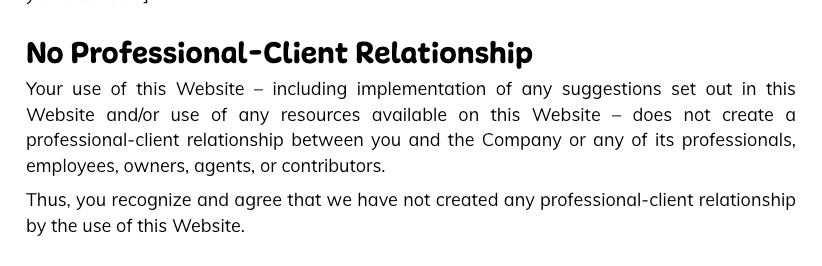 K5 Counselors website disclaimer
Investment

Removes liability for providing investment analysis, news, or other investment-related information, useful for finance-focused sites.
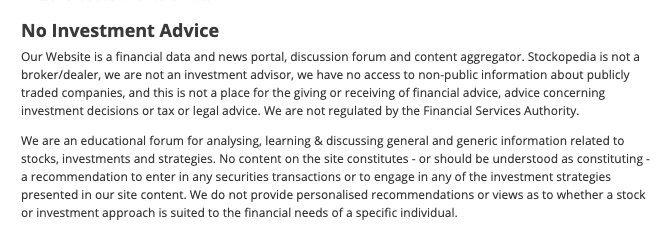 Stockopedia Investment disclaimer
Affiliate Disclosure

If your site contains affiliate links, you’re required to comply with the FTC’s disclosure guidelines, which means clearly identifying yourself as an affiliate and disclosing that you earn money from purchases made through your links, for example, disclosing your participation in Amazon’s Associates Program, if applicable.
 Amazon’s Associates Program Operating Agreement
Below is an example of a good website affiliate disclosure disclaimer from the website Preppers.com
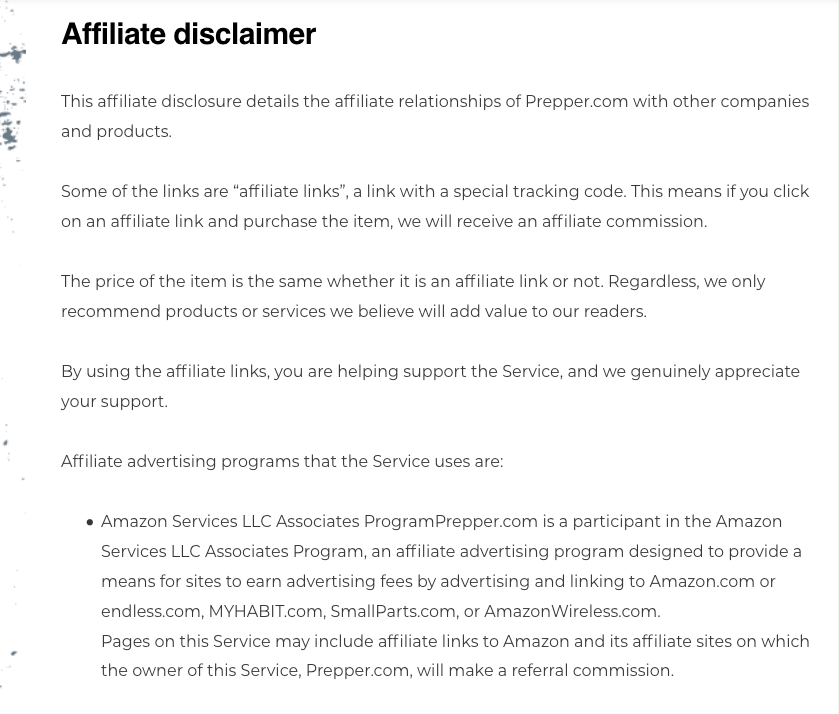 preppers.com affiliate disclaimer
Reviews
Useful for any site that reviews products, services, or resources. It explains that reviews are the author’s opinion, and discloses if products or services being reviewed were provided at a discount or for free in exchange for the review.
 Product Review Alliance review disclaimer
Earnings

Useful if your site reports the earnings results of clients or customers who’ve used your products or services, clarifying that individual results vary and aren’t representative of every customer’s experience.
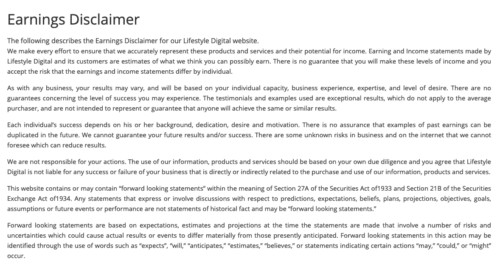 Lifestyle Digital earnings disclaimer
Testimonials
If your site features testimonials, this disclaimer explains that one user’s experience doesn’t necessarily represent the experience of all users.
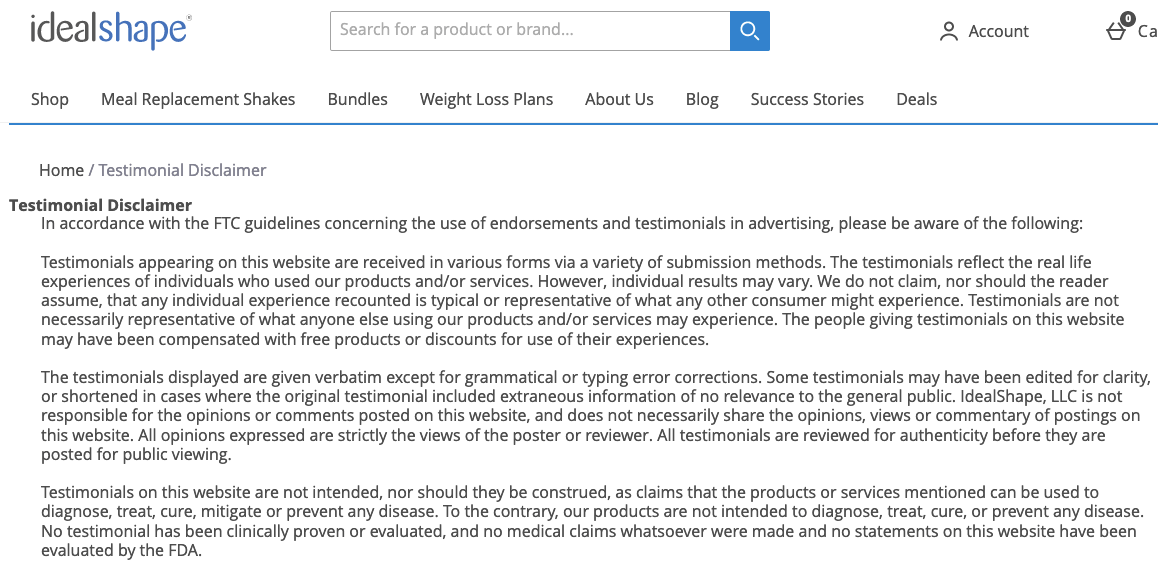 idealshape testimonial disclaimer
Fitness

For sites offering fitness, health, or nutritional information: explaining the content is educational only, isn’t a substitute for professional advice, and recommending users consult a health professional before starting any fitness program.
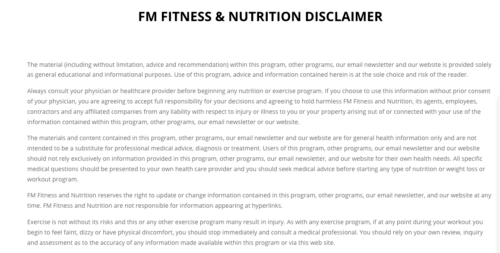 FM fitness & nutrition disclaimer
Medical

For sites offering medical information: reducing liability for the content provided, clarifying it’s not a substitute for professional medical advice, and advising users to seek immediate medical attention in an emergency.
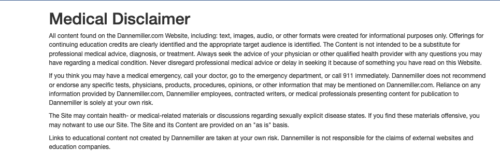 DanneMiller website medical disclaimer
Legal

A must for any site covering legal topics: making clear there’s no lawyer-client relationship, and that the content is for informational purposes only.
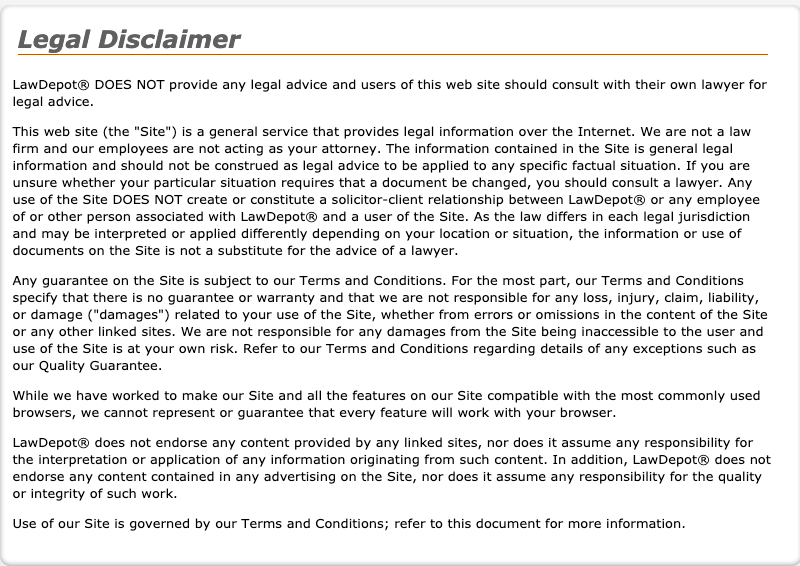 legal disclaimer from Law Depot
Social Media Channel
A brief, general disclaimer covering videos, podcasts, or other media you publish, confirming it’s your copyrighted material.
Map Policy
If you publish a Google Map on your site for directions, this disclaimer removes any implication that you hold an opinion about anything shown on the map.
Blog

For personal blogs that share opinions or views: minimising liability and letting readers know posts are for informational purposes only.
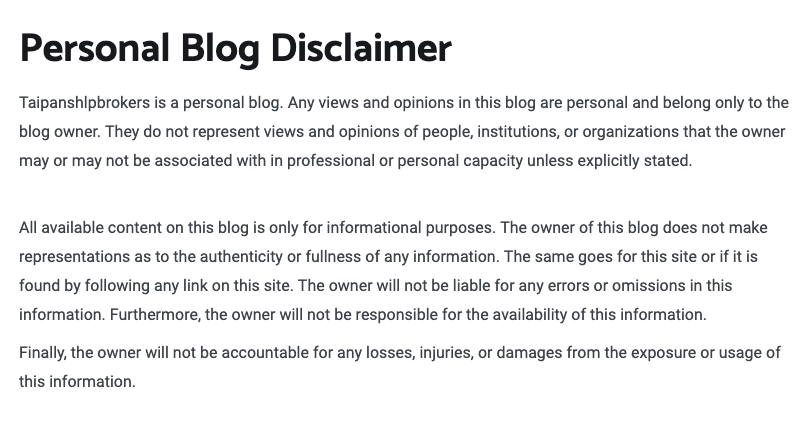 taipanshipbrokers.com personal blog disclaimer
Product
If your site sells products, this disclaimer limits your liability and states that using the product is at the user’s own risk.
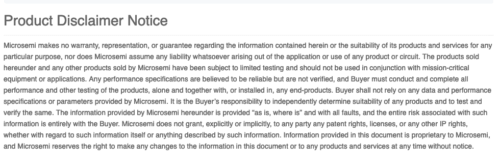 Microchip product disclaimer
Price Inaccuracies
Useful for sites that sell products: covering you in the event prices are listed incorrectly, so you’re not obliged to honour an erroneous price.
YouTube Video

If you embed YouTube videos, your own or others’, this disclaimer clarifies the video is governed by YouTube’s own terms of service (since it’s hosted on YouTube’s servers), that content isn’t yours if it’s not your own video, and that YouTube’s suggested related links aren’t your responsibility.
Fair Use Notice
Clarifies that your site may contain material you don’t own the license to, that you believe its use constitutes fair use, and specifies Section 107 of the US Copyright Law. If you’re using copyrighted work under fair use, this disclaimer is required.
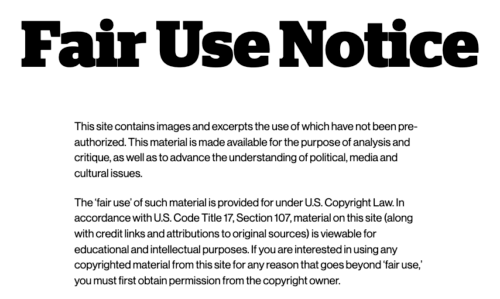 Fair use notice from reading the Pictures website
Personal Responsibility
A general disclaimer useful for all websites, stating that use of your site is voluntary and that any actions a user takes are their own responsibility.
Conclusion
Disclaimers are a useful addition to any website, helping reduce legal liability in areas not covered by your terms and conditions agreement, generally as short, focused paragraphs protecting your content and services.
Our disclaimer generator offers all of the disclaimer types above. Some of the more generic ones are free, with a small charge for the more specialised ones, all drafted by a lawyer, so you can feel confident your business has a solid disclaimer in place.
The information in this article is for informational purposes only and should not be construed as legal advice on any matter, and does not create a lawyer-client relationship.