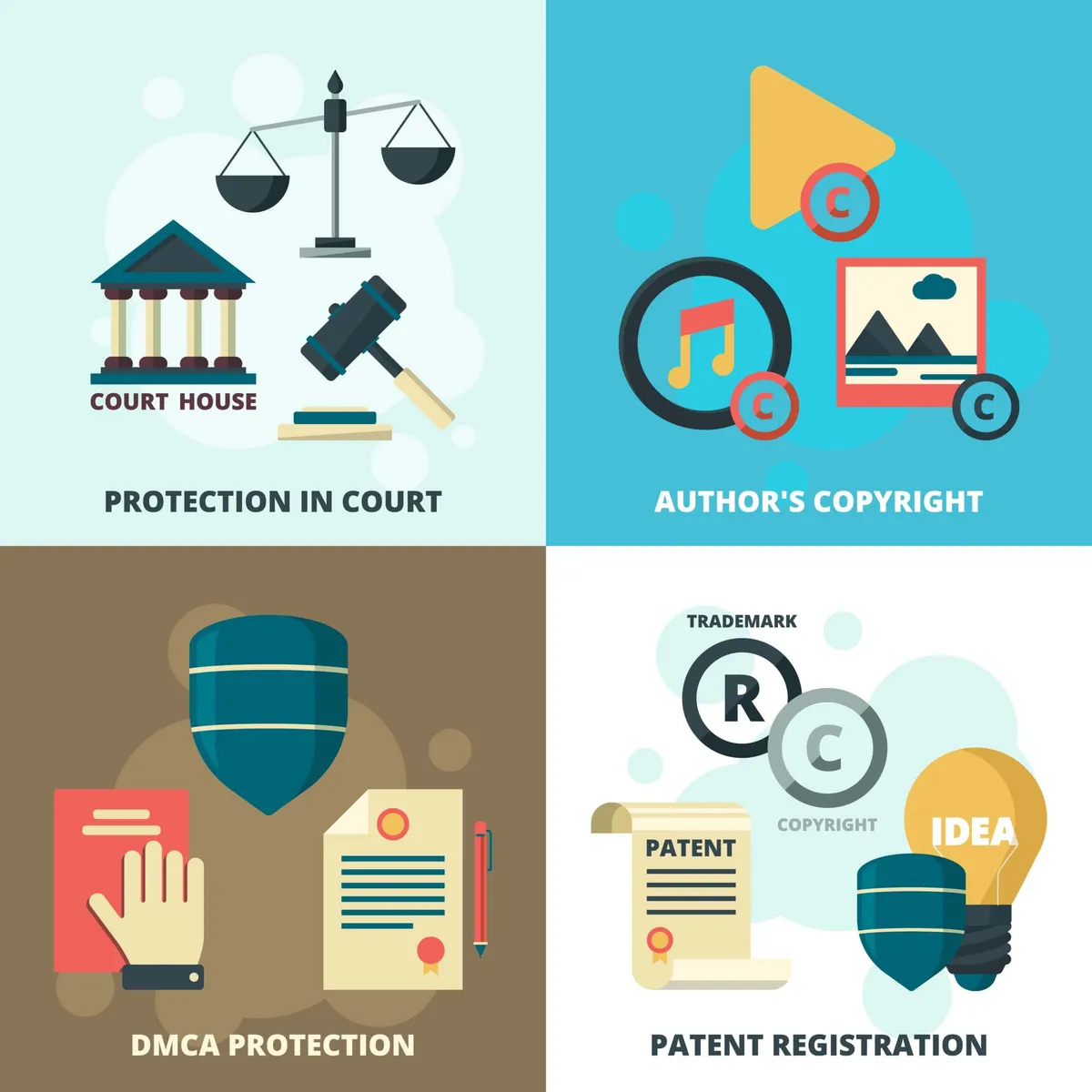
DMCA stands for the Digital Millennium Copyright Act, a United States copyright law passed on 12 October 1998. It integrated two World Intellectual Property Organization treaties into US copyright law (the WIPO Copyright Treaty and the WIPO Performances and Phonograms Treaty), and exempted online service providers, including internet service providers, from copyright infringement liability, provided they meet certain requirements.
What Is a DMCA Notice?
A DMCA notice is a formal way of informing a website that it’s using copyrighted material without proper authorisation. It covers any copyrighted material, including videos, written words, audio, artwork, pictures, and software.
How Does the DMCA Relate to Your Website?
The DMCA applies to websites hosted in the United States, so even if your business is located elsewhere but your site is hosted in the US, DMCA regulations still apply. If your business is based outside the US, this clause is sometimes instead referred to as a copyright infringement clause.
If your website publishes user-generated content, those users need to own the rights to what they post, or it may be considered an infringement. If content is found to infringe copyright, you may receive a DMCA notice (also called a takedown notice) from the content owner, and as a website owner, you might also unknowingly have used copyrighted material without proper authorisation yourself. Either way, receiving a takedown notice may require you to remove the content.
DMCA Notice Requirements
Once a copyright owner identifies their content being used without consent, they can issue a DMCA takedown notice. It must be in writing, identify the copyrighted work and the infringing material, and include:
- A signature from the copyright holder or their agent
- A description of the copyrighted material and its location (URL), and the location of the original content
- Contact details for the person submitting the notice
- A statement that the information provided is accurate to the best of their knowledge
- A good faith statement that the content hasn’t been authorised by the copyright owner
- A statement that the person issuing the notice is either the copyright owner or authorised to act on their behalf
DMCA Clause in Your Terms and Conditions
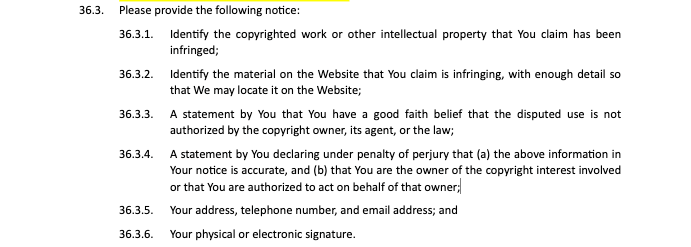 A section of the DMCA clause from the privacyterms.io Terms and Conditions generator
A DMCA clause in your terms and conditions lets copyright owners know that your website responds to takedown notices and will remove infringing content. It should include the DMCA requirements above, explain how to issue a notice, and how users can file a counter-notice if they believe content was removed incorrectly.
Does a DMCA Notice Work Outside the USA?
What if content is used without consent outside the US, or someone in the US uses your content without consent while you’re based elsewhere? In both cases, you can still issue a DMCA notice: it’s simply a formal request for the takedown of content used without the owner’s approval. If the notice is accepted and complied with, that’s the end of it; otherwise, you’d need to pursue legal action.
Receiving a DMCA Notice
If you’re a website owner and receive a DMCA notice, don’t panic. Check whether the content was in fact used without permission, and if so, remove it from your website immediately. If you don’t believe it was used without consent, remove the content anyway while you establish who it belongs to.
If the content is genuinely yours, reach out to the person who issued the notice (their contact details should be included) and explain the situation. If the notice was issued by mistake, they can retract it, otherwise, you can issue a counter-notice.
Counter-Notice
If you believe a DMCA notice was issued incorrectly, and reaching out to the complainant hasn’t resolved things, you can issue a counter-notice. It must include:
- Your signature
- The content you removed, and where it appeared before removal
- A good faith statement that you believe the content was removed due to an error
- Your contact information
- A statement that you’ll cooperate with the Federal District Court in your judicial district (even if you’re based outside the US, you must agree to your case being handled there)
The complainant can then choose to retract their notice, or pursue a copyright lawsuit.
Tips for Intellectual Property
- Consider registering copyright on your intellectual material: not mandatory, but it makes proving ownership much easier.
- If using someone else’s content, make sure you have proper permission, or that it’s genuinely open source and free to use.
- Understand what constitutes fair use, and whether your situation qualifies.
- If someone’s using your content without permission, try reaching out directly first, often they have no idea they’re doing anything wrong.
Conclusion
A DMCA notice is a formal way of requesting the removal of copyright-infringing material from a website, applying to any site hosted in the US, regardless of where the business itself is based. Your terms and conditions should include a DMCA clause, letting users know you honour takedown notices and explaining how to issue one, or dispute one via a counter-notice.
Visit our terms and conditions generator for your DMCA-clause-inclusive terms and conditions agreement.
The information in this article is for informational purposes only and should not be construed as legal advice on any matter, and does not create a lawyer-client relationship.