Our Terms and Conditions Generator is a solution for you to create the terms and conditions for your website or app. You can generate your own template using our terms and conditions generator.
Generate your own custom Terms and Conditions
Your terms and conditions should be easy to understand and should not be written using any ambiguous language.
What are Terms and Conditions?
A terms and conditions document allows you to spell out a set of rules for your users. These rules can cover your services, sales, or something as simple as the use of your website. To confirm that your users understand and accept these rules, you should get them to click “Agree.”
What should I include in my Terms and Conditions Agreement?
Every business or individual has their own requirements for what to include in their terms and conditions. Depending on your business, here’s a common list of clauses you may want to include:
- Introduction: the scope of your agreement, and an explanation of the terms you use in the document
- Usage of the website: your policy for hyperlinking to your content, use of iframes, and your policy on allowing or disallowing penetration testing of your network
- Purchases and other e-commerce terms: returns, disputes, and refunds
- Disclaimers related to the delivery of your services and products
- Guidelines for using your trademarks, licenses, and copyrights
- Your policy on piracy and counterfeit products
- User-generated content: your policy on intellectual property infringement, anonymous bullying, and inappropriate content
- Feedback and contact information
- Removal of content from your website
Terms and Conditions clauses in practice
Looking at how established companies structure these clauses can be a useful reference point when drafting your own. A few things worth checking when you look at other companies’ published terms and conditions pages:
- Introduction/scope clauses typically explain what using the site or service means you’re agreeing to, and that using the site constitutes acceptance of the terms.
- License and copyright clauses usually explain what license, if any, applies to the content on the site, and what rights users are or aren’t granted over it.
- Hyperlinking clauses often set expectations around who may link to the site and under what conditions, worth checking both your own policy and the policy of any site you plan to link to.
- Feedback and contact clauses typically explain how users can submit feedback or suggestions, and what rights (if any) the company retains over that feedback once submitted.
- Returns and refunds clauses, especially for online stores, typically set out response timeframes, what happens if an item goes missing or arrives damaged, and who’s responsible for return shipping costs.
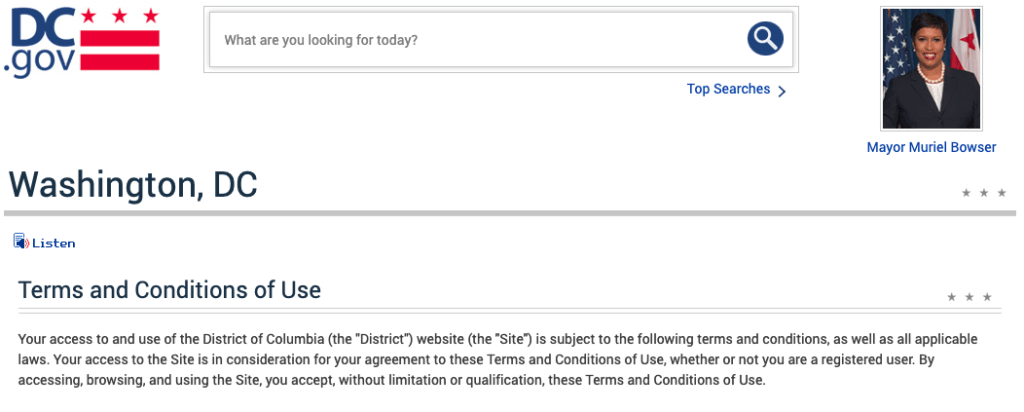 Source: dc.gov/page/terms-and-conditions-use
Retailers like eBay, Amazon, and ASOS all publish their own returns and refunds terms publicly; these are worth reviewing directly on their own sites for a sense of how a mature returns policy is structured, particularly around timeframes, fair-use expectations, and account-level enforcement for unusual return patterns.
How to create your own terms and conditions
Head over to our terms and conditions generator to create your own terms and conditions.
The information in this article is for informational purposes only and should not be construed as legal advice on any matter, and does not create a lawyer-client relationship.