These 8 reasons you need a Terms and Conditions agreement are important to consider when creating your Terms and Conditions, also known as a terms of service, agreement. A Terms and Conditions agreement isn’t a legal requirement for a website, unlike your privacy policy, but that’s not a reason to skip having one. Terms and conditions provide clear outlines for a user, and protection for both the user and your business.

The Terms and Conditions on your website act as a legal contract between you and your users. They typically include:
- Guidelines for acceptable behaviour
- The rights and responsibilities of the user
- Confidentiality outlines
- Privacy policy
- Intellectual property rights
- Copyright
- Cancellation policy
- Refund policy
- And much more
Let’s take a look at a few key reasons to consider when writing your Terms and Conditions, and what they mean for your business.
Reason 1: Trust
A Terms and Conditions contract gives your business a higher level of professionalism. Transparency results in increased levels of customer confidence, satisfaction, and trust in you and your business.
A clear Terms and Conditions contract makes it easy for your users to know what to expect from you, and what you expect from them, for example, many large e-commerce sites publish clear product-description clauses in their terms, setting out what recourse a customer has if an item received doesn’t match its description. This provides a level of protection to your company if you ever need to enforce a particular section of your terms.
 Amazon’s Product Descriptions clause
Reason 2: Protect Your Content
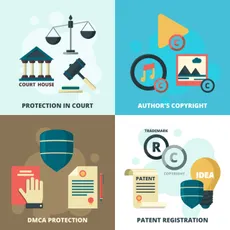
A Terms and Conditions contract protects all of the content on your website, other than user-generated content. This includes your logo, the design of your website, graphics, audio and video clips, and your written content.
In agreeing to your terms and conditions, your users agree not to reproduce, distribute, sell, publish, or broadcast any of the material on your website without your written consent. This content is protected under international copyright law, and is usually addressed under a heading like “Intellectual Property.” Many major tech companies publish detailed intellectual property clauses that clearly state all site content is owned by the company, worth reviewing for inspiration on how to phrase your own.
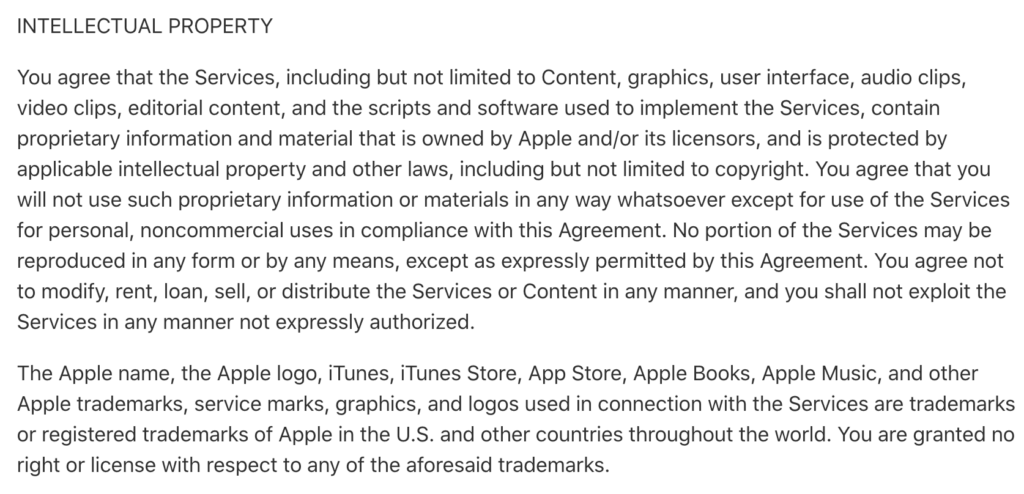 Apple’s Intellectual Property clause
Reason 3: Limit Liability
A Terms and Conditions agreement ensures your users are aware of the rules governing your service and content. As a legally binding contract between the user and yourself, it reduces the chances of legal action against you. Limiting your liability, even a little, is better than leaving yourself exposed by omitting this from your agreement.
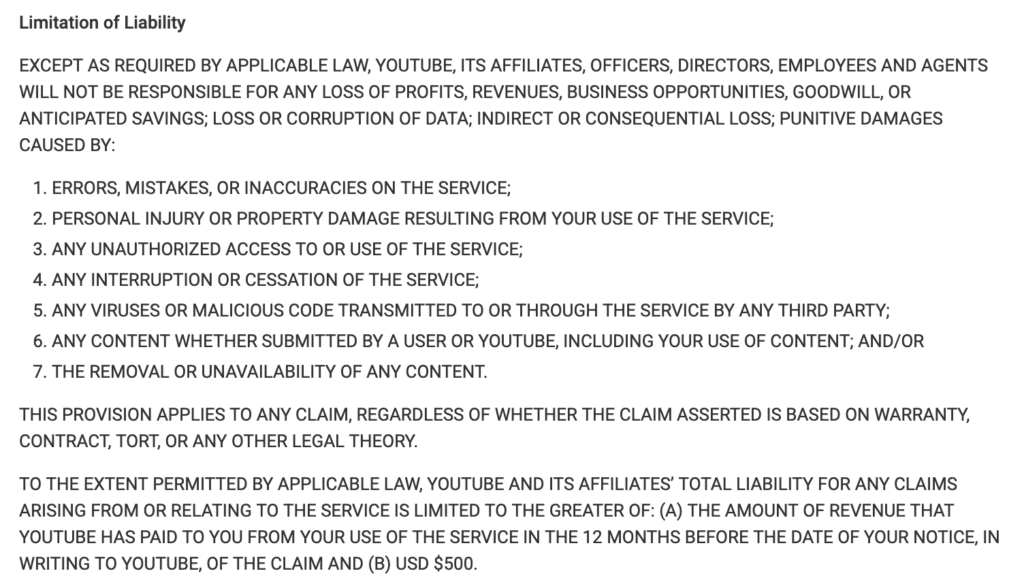 YouTube’s Limitation of Liability clause
A typical limitation of liability clause notifies users that your website isn’t responsible for errors in content, damage to the user or their property, or that any information provided is accurate or suitable for a particular purpose.
Reason 4: Prevent Abuse
Your Terms and Conditions contract should include a clause outlining the rules of conduct users must follow while using your site: covering things like providing false information, impersonating another person, unauthorised advertising, spamming, stealing content, or attempting to upload harmful code or viruses.
If your site allows comments or user-generated content, you can include a clause stating that abusive or profane language won’t be tolerated, and that this could result in a temporary or permanent ban.
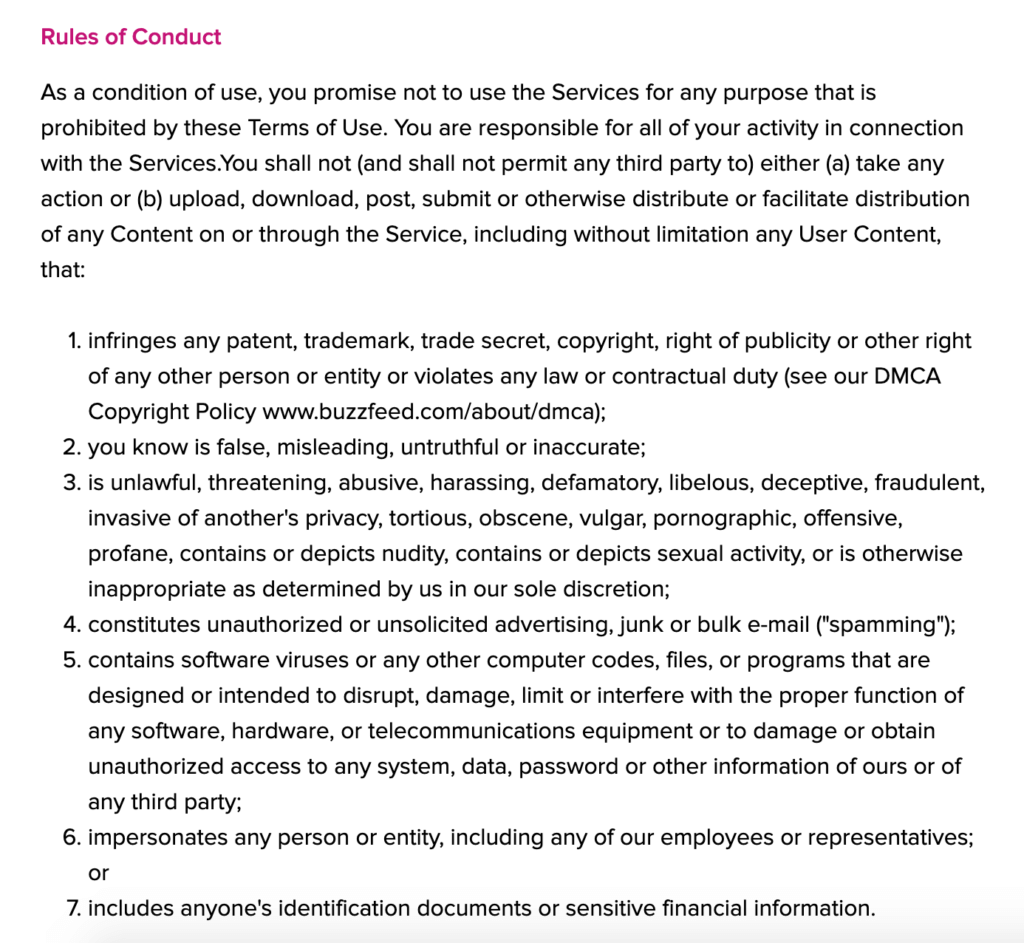 Excerpt of Buzzfeed’s Rules of Conduct
Reason 5: Termination or Suspension of Account
A Termination and Suspension clause is particularly useful for websites with a registration or account system. It clarifies what rights you and your user have when terminating or suspending an account. Can the agreement be ended at any time? Does notice need to be given by either party?
This clause should also direct your users on what to do if their account is suspended or terminated, and what process to follow if they believe this happened incorrectly.
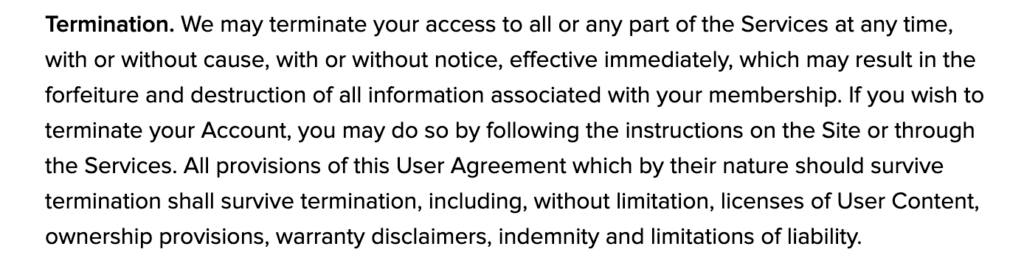 Buzzfeed’s Termination clause.
Reason 6: Governing Law
It’s important to identify which laws your website or business falls under, usually the country you’re based in. So, for example, if your website is based in London, UK, or Sydney, Australia, you’d typically state those jurisdictions as your governing law.
 YouTube’s Governing Law clause.
That said, it’s not necessary to use the law of the country you reside in; you’re free to choose. There may be technical reasons to pick a particular jurisdiction, but ultimately the choice is yours, and it’s usually a law you’re familiar with.
Reason 7: Clearly Define Billing Terms
If your website includes paid memberships, an online store, or any other form of payment, you’ll want a clause covering billing or payment terms: covering payment methods, refunds, and billing cycles.
These sections should be clearly labelled and easy to understand. What payment methods does your website accept? Do you issue refunds under any circumstances, and if so, what are they? Subscription services in particular are often very explicit about their refund policy, so users have no ambiguity about what recourse (if any) they have after agreeing to the terms.
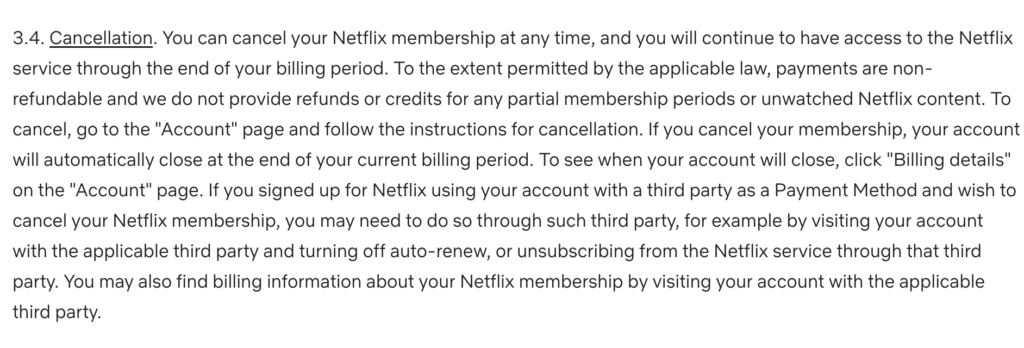 Netflix’s Cancellation Policy
Reason 8: Enforcement of Agreement
An agreement statement of use in your Terms and Conditions contract lets you enforce your policies and determine whether there’s been a breach of contract. Should you ever need to take a customer to court to obtain payment, or address a violation of the contract, this agreement will help avoid problems.
 Microsoft’s agreement statement of use.
Your agreement statement is typically placed at the very beginning of your Terms and Conditions contract, since it’s the first thing a user will see. By using your website and services, the user agrees to the terms and conditions laid out in the agreement.
Conclusion
We’ve covered many of the reasons a Terms and Conditions agreement is important for your website: helping limit your liability, building user trust and confidence, and protecting your content. Generate your Terms and Conditions agreement today.
The information in this article is for informational purposes only and should not be construed as legal advice on any matter, and does not create a lawyer-client relationship.